
Why do dressing room wardrobes matter so much?
For many Indian homeowners, a dressing room is no longer a distant luxury. With smart planning, even a modest flat can have a stylish, organised space for clothes, shoes, and accessories. The heart of this space is your wardrobe system. Good dressing room wardrobes make every morning smoother and keep your investment in clothing safe and neatly arranged.
Whether you are planning a full walk in wardrobe or converting a spare room corner, the right design can add comfort and long-term value to your home. For Indian investors, it also supports better resale value and rental appeal, especially in metro cities. Let’s break down how to plan, choose, and get the best return from your wardrobe project.
Step 1: Understand your space and storage needs
Start with a measuring tape and a clear mind. Measure the full length, width, and height of the room or wall where you want your wardrobe. Note the position of doors, windows, plugs, and any beams or columns. These details decide whether you should go for built-in units, walk in wardrobes, or a mix of both.
Next, list what you actually need to store. Count how many sarees, suits, shirts, long dresses, belts, bags, and shoes you own today. Add some extra space for the next 3 to 5 years. This small exercise helps you pick the right balance of hanging space, drawers, open shelves, and closed cabinets.
Step 2: Choose the right type of dressing room wardrobes
There are three broad types you can consider. Each works well in Indian homes, depending on size and budget.
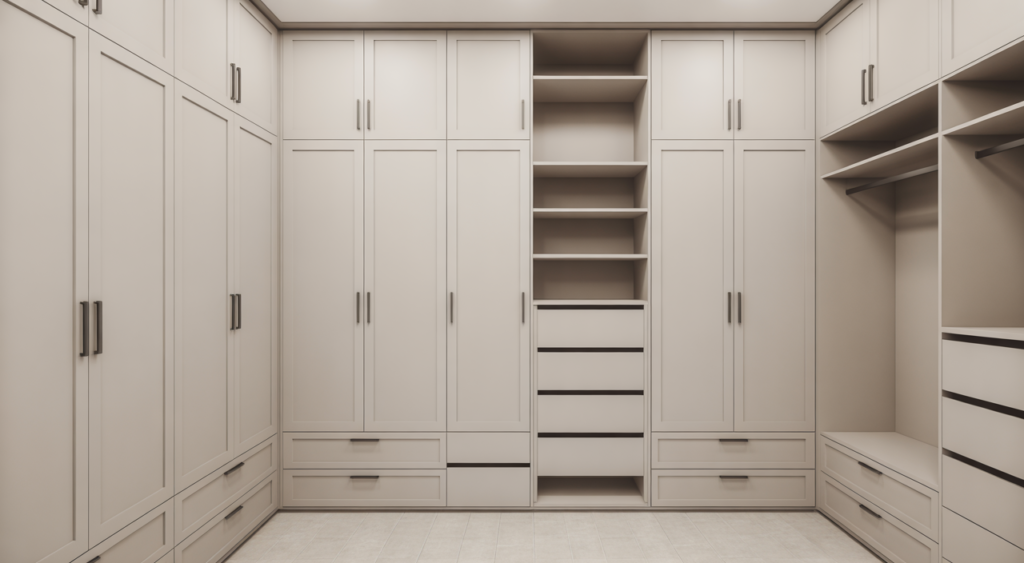
- Fitted wardrobes: These are fixed from wall to wall and from floor to ceiling. Great for making use of every inch, especially in compact rooms. They also give a clean, seamless look.
- Walk in wardrobes: Best when you have a separate room or a large section to dedicate to storage. Here, you walk into the wardrobe area, with open or glass-front units on both sides.
- Free-standing wardrobes: These are classic cupboards that can be moved or replaced. They are flexible but may waste some wall height or corner space.
Most modern dressing room ideas combine fitted wardrobes with a small walk-through path, a mirror, and a bench or ottoman. This creates a boutique feel without needing a very large room.
Step 3: Pick a style that matches your home
Your wardrobe design should match the rest of your interiors. For a modern apartment, flat-front shutters with hidden handles and soft-close hinges work beautifully. Neutral colours like white, beige, light grey, or wood tones keep the room bright and make it feel bigger.
If your home has a more traditional style, you can choose panelled doors, warm wooden finishes, and metal handles. Glass shutters, especially tinted or frosted glass, add a luxury wardrobes look while still keeping dust away from your clothes. For a truly premium feel, consider full-height mirrors on some shutters to save space and add depth.
Step 4: Plan your budget and timeline
For Indian investors and homeowners, budgeting is one of the most important steps. Wardrobe costs depend on material, size, internal fittings, and finishes. As a simple rule, built-in wardrobe designs with high-quality hardware and accessories will cost more than basic cupboards but will also last longer and use space better.
Break your budget into clear parts: structure, shutters, internal accessories, lighting, and installation. This makes it easy to upgrade or simplify certain areas without compromising the full project. If you enjoy detailed guides, you may also like this clear breakdown of how modern hinges and fittings improve furniture.
Also plan your timeline. Many fitted and bespoke wardrobes take a few weeks from design approval to installation. If you are renovating, align the wardrobe work with other interior tasks like painting and flooring. This saves both time and money.
Step 5: Maximise storage with smart interiors
The real magic of dressing room wardrobes lies inside. Smart organisers turn the same square footage into far more usable space. Pull-out trouser racks, saree and dupatta hangers, tie and belt trays, and jewellery drawers keep everything visible and easy to reach.
Use double hanging rails for shirts and shorter items, and a single high rail for long dresses or ethnic wear. Deep drawers are perfect for folded clothes and kids’ items, while open cubbies work well for handbags and boxes. Adjustable shelves let you change the layout as your wardrobe changes over time.
Step 6: Add lighting for a high-end feel
Good lighting is one of the simplest ways to make your dressing space feel premium. Warm LED strips under shelves or along the wardrobe sides highlight clothes and help you see true colours. Sensor lights that switch on when you open a shutter feel very high-end and are also energy-efficient.
For the overall room, a central ceiling light plus a focused light near the mirror works well. If you enjoy home improvement and decor tips, you might find this guide on why fitted bedroom wardrobes keep homes clutter-free very useful as you plan your layout.
Step 7: Think long-term: materials and durability
Indian climates can be hot and humid, especially in coastal and semi-coastal areas. Choose materials that resist moisture and warping. High-quality engineered wood with proper edge banding, strong hardware, and good ventilation inside the room will keep your wardrobes looking fresh for years.
Also consider easy-to-clean finishes. Matte textures hide fingerprints, while laminate or membrane shutters are simple to wipe down. If your dressing room is near a balcony or window, think about sun exposure and use UV-resistant finishes or curtains to protect both furniture and fabrics.
Step 8: Treat your wardrobe as an investment
For Indian investors focused on rental or resale, a well-designed dressing area is a strong selling point. Tenants and buyers see it as a ready-to-use premium feature that saves them future hassle and money. In many mid to high-end projects, fitted wardrobes are almost expected in at least one bedroom.
By investing once in good fitted or bespoke wardrobes, you reduce the need to replace low-quality units later. You also protect valuable clothes, jewellery, and accessories, which themselves are long-term assets.
FAQs on dressing room wardrobes
Q1: How much space do I need to create a small dressing room?
In most Indian homes, you can carve out a compact dressing area in as little as 5 to 6 feet of wall length with a depth of about 2 feet for wardrobes and a small walkway. If you cannot spare a full room, use one wall of your bedroom with fitted wardrobes and a mirror plus a narrow console. Smart internal organisers will still give you a “mini walk-in” experience.
Q2: Are built-in or free-standing wardrobes better for Indian apartments?
Built-in or fitted wardrobes are usually better for long-term use because they use every inch of vertical and horizontal space. This is very helpful in city apartments where every square foot counts. Free-standing units are more flexible if you move homes often, but they can waste space at the top and sides and may not match the room as neatly.
Q3: What are the most useful accessories to add inside dressing room wardrobes?
For most families, the best accessories are pull-out drawers, double hanging rails, a shoe rack, and a jewellery or accessories tray. Saree pull-out hangers and deep shelves for travel bags are also very practical. Start with these basics, and you can always add more specialised organisers later as your needs grow.

Blake Frank is a marketer and tech enthusiast based in Idaho. With over 9 years of experience in the digital marketing industry, he has gained a wide range of knowledge and skills such as SEO, web design, and digital analytics. Blake is passionate about providing insights into how technology and marketing intersect to create successful marketing strategies. In his free time, he enjoys mountain biking and exploring the great outdoors.