

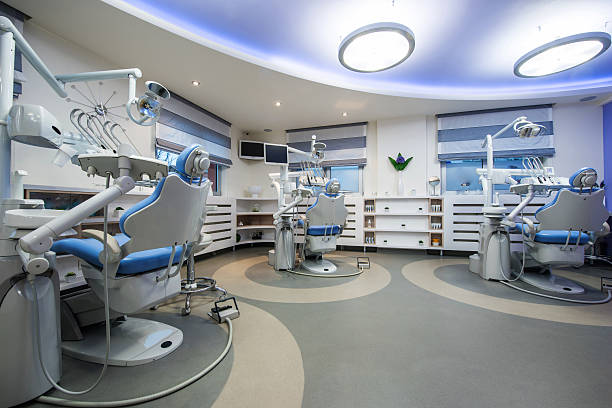
Dental clinic interior design with several working boxes and tools
Dental care is no longer dominated by small private offices alone. Corporate dental models, often called Dental Service Organizations, now operate across the United States and other countries. Supporters see efficiency and growth. Critics see commercialization. Pros and cons of corporate dental models. The truth sits somewhere in between.
The Pros and Cons of Corporate Dental Models
Corporate dental models centralize business operations while dentists provide clinical care. This structure changes how practices are managed, funded, and scaled.
Pros of Corporate Dental Models
Operational Efficiency
Corporate groups handle:
• Billing and insurance processing
• HR and recruiting
• Marketing and advertising
• Regulatory compliance
This reduces administrative burden for dentists. In theory, clinicians can focus more on treatment instead of paperwork.
Efficiency can also reduce operational errors and improve scheduling systems.
Economies of Scale
Large organizations negotiate bulk contracts for:
• Dental supplies
• Laboratory services
• Equipment purchases
• Technology platforms
Lower procurement costs may increase profit margins. Whether savings translate into lower patient costs depends on pricing strategy and location.
Scale creates leverage that independent clinics often cannot match.
Access to Capital and Technology
Corporate backing allows investment in:
• Advanced imaging systems
• Digital workflow tools
• Modern clinic design
• Multi location expansion
Independent dentists may struggle to finance large upgrades. Access to capital accelerates modernization.
Technology adoption can improve diagnostics, documentation, and treatment planning accuracy.
Structured Career Pathways
For new graduates, corporate models often offer:
• Salary stability
• Benefits packages
• Mentorship programs
• Reduced financial risk compared to ownership
With high student debt levels in dentistry, stable income can be attractive early in a career.
Ownership is rewarding but financially demanding. Corporate employment lowers entry barriers.
Standardized Compliance Systems
Corporate groups often implement:
• Defined documentation protocols
• Uniform infection control procedures
• Internal audits
• Risk management oversight
Standardization reduces variability and supports regulatory compliance.
Cons of Corporate Dental Models
Reduced Clinical Autonomy
A common concern involves productivity expectations.
Some dentists report:
• Revenue targets
• Treatment quotas
• Performance metrics tied to output
When business metrics influence performance evaluation, clinical independence may feel constrained.
The perception of pressure can affect morale and patient trust.
Emphasis on Volume
Corporate structures often prioritize:
• Appointment efficiency
• Higher patient throughput
• Standardized treatment presentations
Shorter appointments may feel rushed to some patients. Volume based models can create tension between efficiency and relationship building.
Not every location operates this way, but the risk exists within scaled systems.
Profit Driven Incentives
Critics argue that corporate environments may encourage:
• Higher margin procedures
• Add on treatments
• Upselling concerns
Even when clinically appropriate, perception matters. Public skepticism can influence brand reputation.
Trust is fragile in healthcare.
Employee Turnover
Dentists working under corporate contracts may:
• Relocate more frequently
• Transition between offices
• Have shorter tenures
This can affect continuity of care. Long term relationships are harder to build when providers change.
Community Disconnect
Independent practices often:
• Sponsor local events
• Build multi generation patient relationships
• Develop deep community roots
Corporate branding may feel less personal, even if care quality remains strong.
Community connection influences loyalty and referrals.
A Balanced Perspective
Corporate dental models are not inherently good or bad. Leadership culture, ethical standards, and local management matter more than ownership structure alone.
Independent practices also face challenges:
• Rising overhead costs
• Staffing shortages
• Regulatory complexity
• Capital limitations
Corporate systems can mitigate some of these pressures.
Patients ultimately care about:
• Clear communication
• Fair pricing
• Clinical competence
• Trust
Ownership structure is secondary to those fundamentals.
Final Thoughts
The pros and cons of corporate dental models reflect a broader shift toward consolidation in healthcare. Scale brings efficiency, capital access, and structured systems. It can also introduce performance pressure and perceived commercialization.
For dentists, the choice involves risk tolerance, career goals, and values. For patients, reading local reviews and evaluating communication style may provide clearer insight than focusing solely on business structure.

Blake Frank is a marketer and tech enthusiast based in Idaho. With over 9 years of experience in the digital marketing industry, he has gained a wide range of knowledge and skills such as SEO, web design, and digital analytics. Blake is passionate about providing insights into how technology and marketing intersect to create successful marketing strategies. In his free time, he enjoys mountain biking and exploring the great outdoors.