


Are you still moving and pouring heavy industrial drums by hand? Do you worry about workplace injuries, messy spills, and slow operations? If so, you’re not alone. Handling drums manually is a major challenge in many industries. It often leads to strains, lost product, and wasted time.
But there’s a much better way. Modern solutions make material handling safer and more efficient. One such solution is the portable drum tipper. These clever machines are changing how businesses handle bulk liquids and powders. They offer a powerful upgrade from traditional methods.
This guide will explore everything you need to know about these versatile devices. We’ll look at their benefits, different types, and how to pick the perfect one for your needs. Get ready to transform your operations!
What is a Portable Drum Tipper?
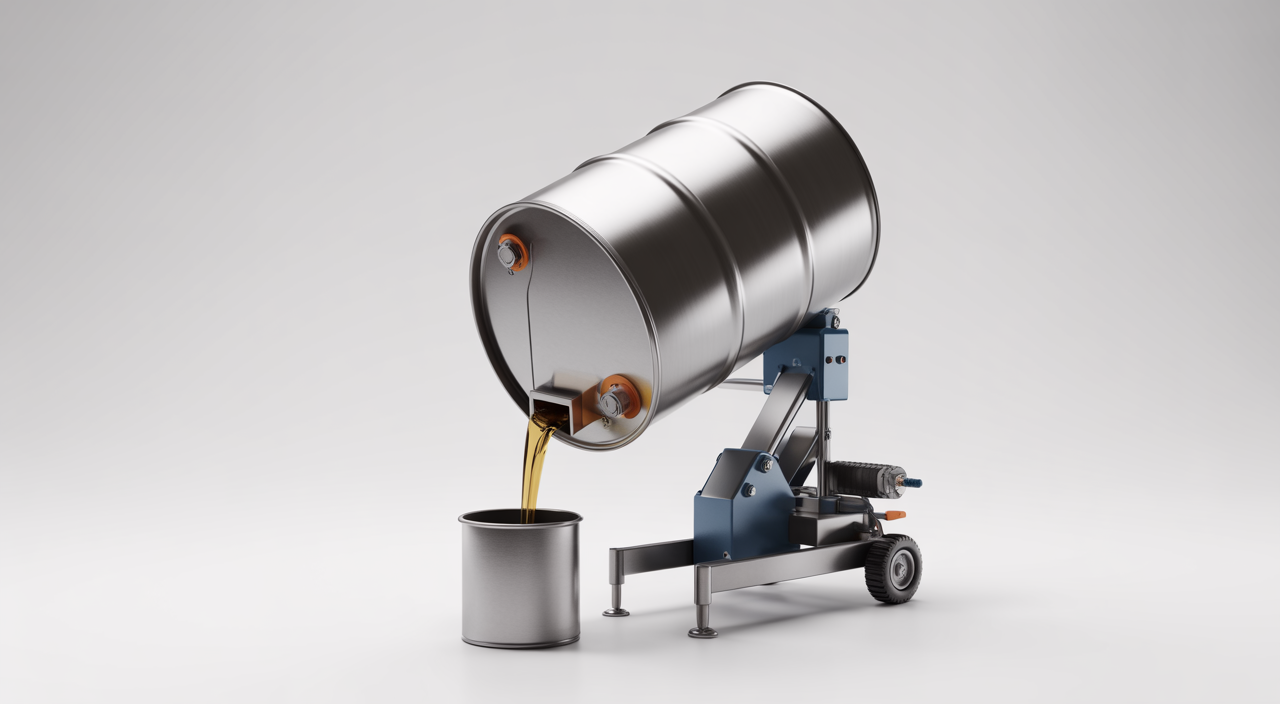
Simply put, a portable drum tipper is a piece of equipment designed to lift and tilt industrial drums. It allows you to pour their contents in a controlled way. Think of it as a mechanical helper for emptying large barrels.
Defining the Device
The main job of a drum tipper is to make pouring safer and easier. It grabs a drum, raises it to a certain height, and then gently tilts it. This controlled movement prevents sudden splashes and spills.
What makes it “portable” is its mobility. Unlike fixed systems that stay in one spot, this equipment can be moved around your facility. This flexibility means you can handle drums in different areas as needed.
How They Work
Most portable drum tippers have a sturdy frame, wheels for movement, and a special clamp to hold the drum. They also feature a lifting and tilting mechanism. This mechanism can be powered in a few ways:
- Manual: You might use a hand crank or pump to lift and tilt.
- Hydraulic: This uses fluid pressure, often with a hand pump or foot pedal, for smoother lifting.
- Electric: A motor powers the lift and tilt, often with a battery, for effortless operation.
Operators secure the drum, raise it, and then tilt it to pour the contents into another container, mixer, or process line. This ensures precise, safe, and clean material transfer. The compact and versatile nature of a portable drum tipper makes it invaluable in many settings.
Why Invest in a Portable Drum Tipper? The Core Benefits
The advantages of using a portable drum tipper go far beyond just moving drums. They directly impact your bottom line and workplace environment.
Enhanced Workplace Safety & OSHA Compliance
Manual drum handling is a leading cause of workplace injuries. Workers can suffer back strains, muscle pulls, or even serious accidents from falling drums or chemical spills. This equipment removes these risks by taking over the heavy lifting and pouring. It helps you meet safety regulations, protecting your team and avoiding costly fines.
Boosted Operational Efficiency & Productivity
Pouring a heavy drum by hand is slow and tiring. A drum tipper automates this. It allows for faster, more consistent pouring. This means your production lines keep moving without delays. Your staff can focus on other important tasks, boosting overall output. It also minimizes product waste from uncontrolled spills, saving valuable resources.
To learn more about how equipment can streamline processes, explore business efficiency solutions.
Unmatched Flexibility & Space Optimization
Fixed drum handling systems are expensive and take up permanent space. A portable tipper gives you flexibility. You can move it to different areas of your plant, even through tight aisles. When not in use, many models are compact enough to store easily. This is perfect for facilities with limited space or changing layouts.
Cost Savings & ROI
The initial investment in a portable drum tipper quickly pays for itself. You’ll see savings from:
- Fewer worker’s compensation claims and medical costs.
- Reduced labor costs by needing fewer people for strenuous tasks.
- Less product loss due to spills.
- Increased production speed, leading to higher revenue.
It’s a smart long-term investment that improves both safety and financial performance.
Key Features to Look for in a Portable Drum Tipper
To get the most out of your investment, consider these important features when choosing a drum tipper.
Capacity & Drum Compatibility
First, check the weight limit. Make sure the tipper can handle your heaviest drums. Also, confirm it’s compatible with your drum types. This includes different sizes (like 55-gallon or 30-gallon) and materials (steel, plastic, or fiber).
Power Source Options
Your power needs will depend on your work environment and frequency of use:
- Manual: Simple, affordable, and good for occasional use.
- Electric (Battery-Powered): Provides effortless lifting and tilting. It’s great for frequent use and offers cordless freedom.
- Air/Pneumatic: Ideal for hazardous areas where sparks are a concern. It uses compressed air.
Discharge Height & Control
Consider how high you need to pour. The tipper’s maximum discharge height should match your receiving containers or hoppers. Look for features like variable speed pouring and precise tilt control. This allows you to pour slowly and accurately, preventing messes.
Material of Construction & Environment
The tipper’s materials should suit your industry. For food, beverage, or pharmaceutical use, stainless steel is often required for hygiene. If you handle corrosive chemicals, look for models with special coatings to prevent rust and damage.
Mobility & Maneuverability
Check the wheels. Swivel casters make it easy to steer in tight spaces. Good brakes are crucial for safety when loading or pouring. Think about how easily it moves across your facility’s floors.
Essential Safety Features
Safety is paramount. Look for:
- Positive Drum Clamping: Ensures the drum is securely held.
- Emergency Stop Buttons: For immediate shutdown if needed.
- Overload Protection: Prevents lifting drums that are too heavy.
- Safety Guards: Protect operators from moving parts.
Applications Across Industries
The versatility of a portable drum tipper makes it useful in many different sectors. Here are some examples:
Food & Beverage Production
Here, they’re used for mixing ingredients, transferring liquids, and emptying drums of sweeteners, oils, or flavorings. Stainless steel models ensure hygiene and prevent contamination.
Pharmaceutical & Chemical Manufacturing
These industries require precise handling of sensitive or hazardous materials. Drum tippers allow for accurate dosing and safe transfer of powders, chemicals, and active ingredients. This minimizes exposure risks.
Industrial & General Manufacturing
From emptying waste oils to adding lubricants to machinery or mixing batches of industrial compounds, a drum tipper improves efficiency across various tasks.
Waste Management & Recycling
Companies involved in recycling or waste disposal use these tippers to safely empty drums containing anything from spent solvents to recyclable plastics. This streamlines the process and protects workers. For more insights on this topic, discover more about industrial waste recycling.
This equipment adapts to diverse operational needs, proving its value time and again.
Choosing the Right Portable Drum Tipper: A Buyer’s Guide
Making the right choice involves a few practical steps. Here’s how to pick the best model for your business.
Assess Your Needs
Start by asking key questions:
- What specific types of drums do you handle (material, size)?
- What is the maximum weight of the drums?
- What is the required discharge height?
- How often will you use the tipper?
- What kind of power source is best for your environment?
Budget Considerations & ROI Calculation
Look beyond the purchase price. Think about the long-term benefits. Calculate your potential savings from reduced injuries, increased efficiency, and less product waste. This will show you the true return on your investment.
Customization & Accessories
Some operations have unique needs. Check if the tipper can be customized with special drum attachments, remote controls, or even integrated scales for precise measurements.
After-Sales Support & Warranty
A good manufacturer offers reliable support, spare parts, and a strong warranty. This ensures your equipment stays running smoothly for years to come.
Portable Drum Tipper Safety: Best Practices & Regulations
Even with the best equipment, proper use is key to safety. Here are some best practices.
Operator Training
Ensure every operator receives thorough training on how to use the equipment safely. They should understand all controls, warning signs, and emergency procedures.
Pre-Operational Checks
Before each use, quickly inspect the equipment. Check for any damage, ensure the drum clamp works, and confirm the wheels and brakes are in good condition. Also, check the drum itself for any damage.
Loading & Securing Drums
Always load drums correctly and securely. The drum must be firmly clamped before lifting or tilting. Ensure the load is balanced to prevent tipping.
Preventing Spills & Contamination
Use controlled pouring techniques. Always lower the drum back down before moving the tipper. Have spill containment protocols in place, especially when handling hazardous materials.
A well-designed portable drum tipper minimizes risks when operated correctly, making your workplace safer for everyone.
Conclusion
A portable drum tipper is more than just a piece of equipment; it’s an investment in your company’s safety, efficiency, and overall productivity. By eliminating manual handling, you protect your employees, reduce operational costs, and streamline your material transfer processes. The flexibility and precision these machines offer are truly transformative for businesses of all sizes.
Ready to enhance your operations with a reliable, high-performance solution? Explore MetoSystems’ comprehensive range of portable drum tipper designed to meet diverse industrial needs and challenges. Our experts are ready to help you find the perfect model for your unique requirements. Contact us today!
Frequently Asked Questions (FAQs)
Q1: How much weight can a portable drum tipper handle?
A1: The weight capacity varies greatly depending on the model and its power source. Manual tippers might handle lighter loads, typically up to 500-800 pounds (225-360 kg). Electric or hydraulic models can often manage much heavier drums, sometimes exceeding 1,500 pounds (680 kg). Always check the manufacturer’s specifications for the exact capacity of a particular unit.
Q2: Can a portable drum tipper be used with different drum sizes and materials?
A2: Many portable drum tippers are designed with adjustable clamps or interchangeable attachments to accommodate various drum sizes, from 30-gallon to 55-gallon (113-208 liters) and even larger. They can also handle drums made of different materials like steel, plastic, or fiber. However, it’s crucial to confirm compatibility with your specific drum types before purchase to ensure safe and effective operation.

Blake Frank is a marketer and tech enthusiast based in Idaho. With over 9 years of experience in the digital marketing industry, he has gained a wide range of knowledge and skills such as SEO, web design, and digital analytics. Blake is passionate about providing insights into how technology and marketing intersect to create successful marketing strategies. In his free time, he enjoys mountain biking and exploring the great outdoors.